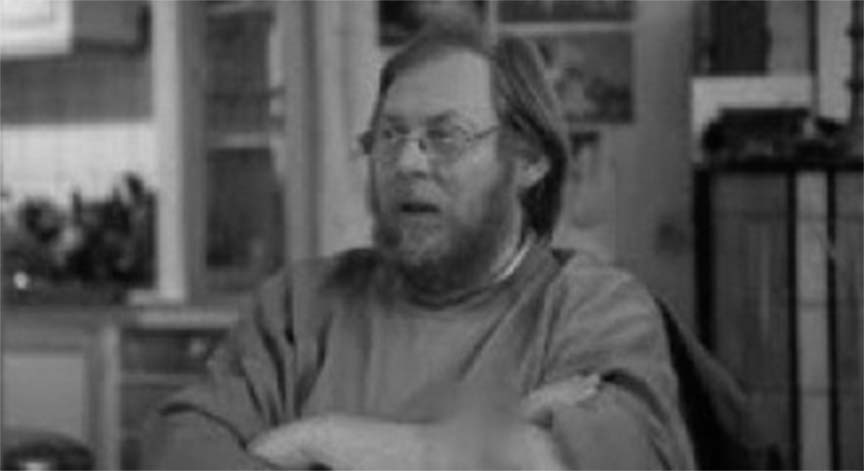
ENGELSK ÖVERSÄTTNING: ERIC DICKENS
Från: ”Elsie Johansson - Dikter 1979-1989”
We had visions, we too.
Once upon a time.
Evenings in late winter
when the snow crust glittered,
and we ran hither and thither across the garden and the barbed wire,
then sat on the kick sleds, back to back
and heard the fox shriek out Källsboda way,
like someone in distress
and the starlight rained down.
Then we must have dreamt
in the fantasy
under the high vault of heaven and the condoling edge of the woods
and the cottages in there with visible smoke.
But what did we dream about?
On that white platform.
My brother had a wind-up gramophone.
My sister collected pictures of film stars.
Her mouth was sticky from the red of crêpe paper.
She expected kisses.
Things will get better for you.
Someone else has toiled.
But what does Good mean?
Our aunts in town had a flush toilet
and red plush curtains.
The ladies on the square, those who bought lingonberries from us, were special in their ways. We imitated them afterwards
in mum’s old shoes.
Strutted and wrinkled up our noses.
Talk about stars anno nineteen hundred and thirty five.
Could anyone really have ended up different?
*
(p11)
The prettiest home
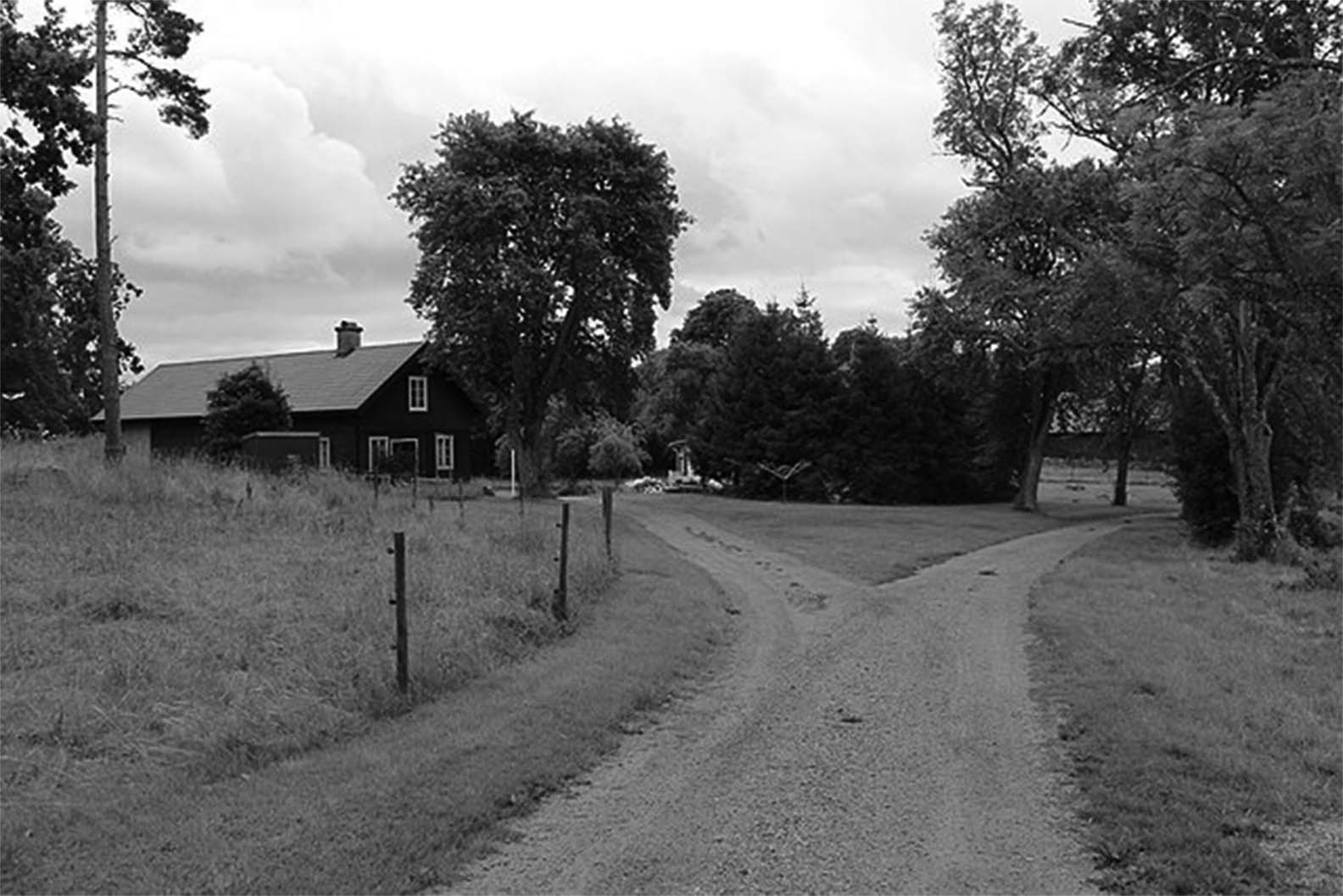
was the cottage on the ridge,
with its crooked verandah and three red walls,
grey round the back.
The warmest warmth
was the heat from the stove
and the steam around the pan with sandy soil potatoes
and the lid on.
The gentlest light
was the glow of the lamp that hugged the table
and cast shadows on the beams and in the corners.
The best of all worlds was inhabited by two.
Though it wasn’t like that.
Hell no it wasn’t!
It was only me who was unaware back then.
*
(p12)
I became the poet in the family,
for whatever reason.
Write something beautiful, said mum,
ethereal
the lilywhite and rose of her abruptly curtailed youth
She’s a devil of a poet, that chit of a girl,
said dad,
he needed to foster all kinds of pride.
But my sisters agreed:
don’t think you ARE someone.
And I wasn’t anyone,
but was seeking myself
in God.
Though all religious folk were suspect.
*
(p13)
This I have learnt:
that politics is one thing
and loyalty another.
As far as I remember the mornings
on the put-you-up couch at home
the yellow ringing light of the paraffin lamp
against my eyelids,
the scraping of the butter knife across the crispbread,
the gurgle of the coffee flask and the musty odour of its cork,
then I am with my folks,
then I see them moving about
there inside my love,
muted,
half in a dream
across the brown plank of the couch
I can see the round aproned stomach
move slowly twisting and turning
between worktop and table.
Another ring on the stove clatters and the gobbet hisses,
a glimpse of dirty yellow ?rallarsammet ?
corduroy
and a rucksack being put on.
Then the cold comes sneaking in from the porch.
The weight of the cat on my legs.
A tiger claw in my legs.
Standing in front of the mirror
looking at myself.
My ageing face.
Me.
Is this me?
Somewhere deep inside
in the tunnels of my eyes
small groves open up
where the grass sways and the sun shadow
plays.
Pebbles and water.
I too am there.
I too am the one
who was playing there then.
Where will I go at the very end?
There?
Nowhere?
In which love shall I live?
*
(p124)
Hated no one.
Loved mum.
Believed in God.
Lugged books around and swept the porch. Thought
that one day I will have made it.
Didn’t know where.
It sometimes came like small thrills of expectation.
Bubbles of joy.
It could ?skämma till
like a light from space.
It was in the doorhandle of the public library
it was sometimes in the very damp on the streets.
I felt it in the wind. I heard it in the rushing sound.
I could smell it in the walls.
It sat in the spring in my steps
when a crossed the bridges
across the River Fyris.
when I
*
(p94)
When I was saved as a child
in the mission hall back home
one Wednesday evening
in nineteen hundred and forty-two
what was it I wanted?
And what did It want of me?
I think I wanted
to be uplifted up
high into the spring-blue night
and to bathe
high up in the starlight
high above the mud of the fields
and the squelch of the edge of the ditch
of the gravelly dung-brown snow.
I think I wanted
to be purified
from shame and pee and the smell of cramped rooms
and snuff and the fear of brandy
and fleshly sinful lust
and pathetic humanity.
And soar high into space
in lofty crystal music.
But God lives in all such muck
that was something I later understood.
*
(p119)
Shhhhh – don’t say anything!
They’ve come.
Came now tonight.
I hardly dare breathe.
Was standing in the strawberry patch
the stiff legged scarecrow
in dad’s old coat
The aspen so sorrowful
The potato tops blackened
The rose hips in line
you know how they dance.
And all the lights of the house
out long ago.
Then suddenly there they were
Crawling on your arms
Hanging and dangling
in the bush of my hair
sat on my shoulders
tickled my earlobe
emerged from my pockets
were in the air all around
and sang for me
sang
little lonely songs
of such beauty
that I almost wept.
Their eyes I saw
but not their colour.
*
(p122)
Tamed and purring
disdainful
deep into my legs.
My sister tinkles piously into her potty.
Like a animal cub,
stamped,
in ?raffelstoppsredet
I am lying and listening
and smelling life into me.
Once and for all.
*
(p14)
Elsies poems were translated by Eric Dickens, 2013–2015. The poems were first published in an international anthology, Time That Glitters, 2017.