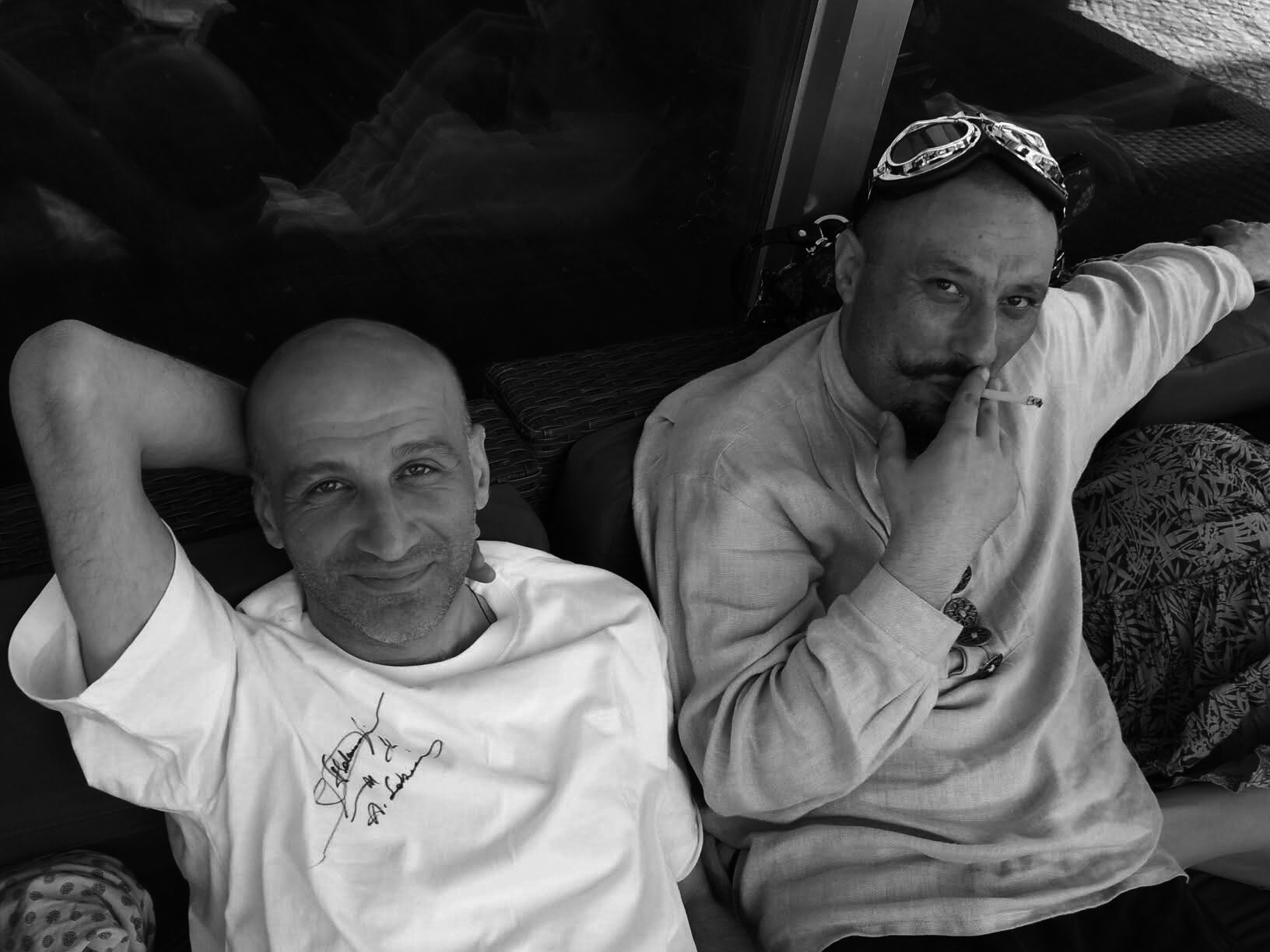
SHOTA IATASHVILI | ÖVERSÄTTNING: MANANA MATIASHVILI
THEN IT was Zurab Rtvelishvili’s turn. He thundered out the first line of his poem, and an answer came from above. Zurab looked up at the sky and thundered out the second line as well. This time, too, the thunder from above did not delay. And so it went on: on the ground, Zurab roared, while in the clouds, Zeus rumbled. When Zurab finished reciting the poem, the heavens fell silent, too.
This was the greatest performance by the "Dada-king" poet, held in 2018 in Telavi at the palace of Erekle II as part of the Tbilisi International Festival of Literature program. For Georgian poets who knew his capabilities, it wasn’t especially surprising, but the foreigners were left astonished. It was written all over their faces, and after this cosmic poetic reading, they found it very difficult to recite their own poems.
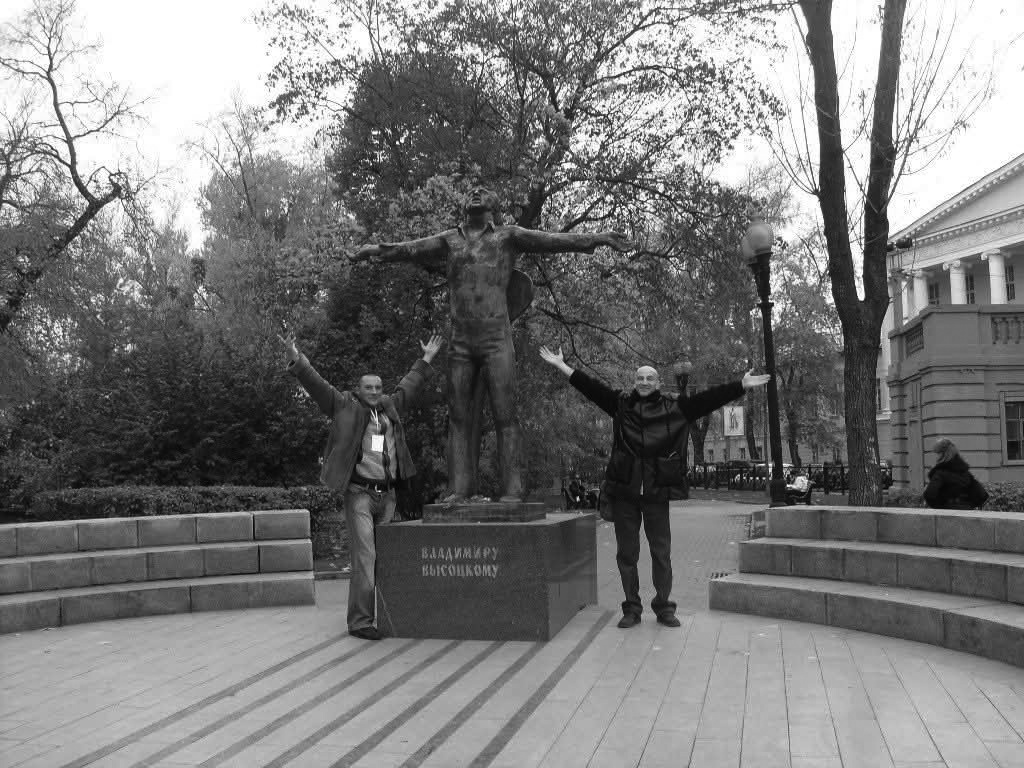
It was generally difficult to go on stage after Zurab, so he was usually placed at the end of the program. And if you were scheduled to perform alongside him, you had no choice – you had to follow his turbulent energy all the way and do something equally unrestrained. That was the case, for example, in 2007, at the opening of the Moscow Biennale, where I was reading my "Flyer," a piece in which the protagonist is first worshipped and then killed, while Zurab, in the finale of the poem, artistically "shot me down" with his fiery words.
Zurab also "shot me down" on the open stage of the Writers’ House in 2018, when, at a retrospective of the poetic orders of the 1990s, he, Giorgi Bundovani, and I were recalling our "Anomalous Poetry"(1) from the Order of the "Chronophages." Back in 1993, he had also become the Dada-King after "gunning down" the audience. With Bundovani’s help, he stormed into the Karvasla(2) space armed with a cardboard weapon and swept over everyone with his Dadaist "da-da-da-da-da" like a burst from a machine gun.
This was his first award, and, if one may say so, the most important and eternal. After that, he received several Georgian and international prizes, but the one that interests me most remains the Andrei Bely Prize. Established in the 1970s by Russian dissident writers, it is still considered one of the most prestigious literary awards in Russia.
In the mid-1990s, Zurab, Dato Robakidze, and I sat in Zurab’s kitchen for a drink. We managed to get one bottle of vodka. Zurab searched for food and found nothing but apples. "What do you want? Apples are good; they go with vodka," he told us. We agreed, and he began slicing the apple. Suddenly, Dato Robakidze realized something: he pulled a crumpled one-Lari note from his pocket, handed it to Zurab, and announced: "You are awarded the Andrei Bely Prize." The point is that since its establishment, laureates of the prize have received a bottle of vodka, an apple, and a single Ruble. Thus, the Dada-King-President became the unofficial holder of the Andrei Bely Prize in Georgia. Zurab loved recalling this story and always mentioned this award among his regalia with great pleasure.
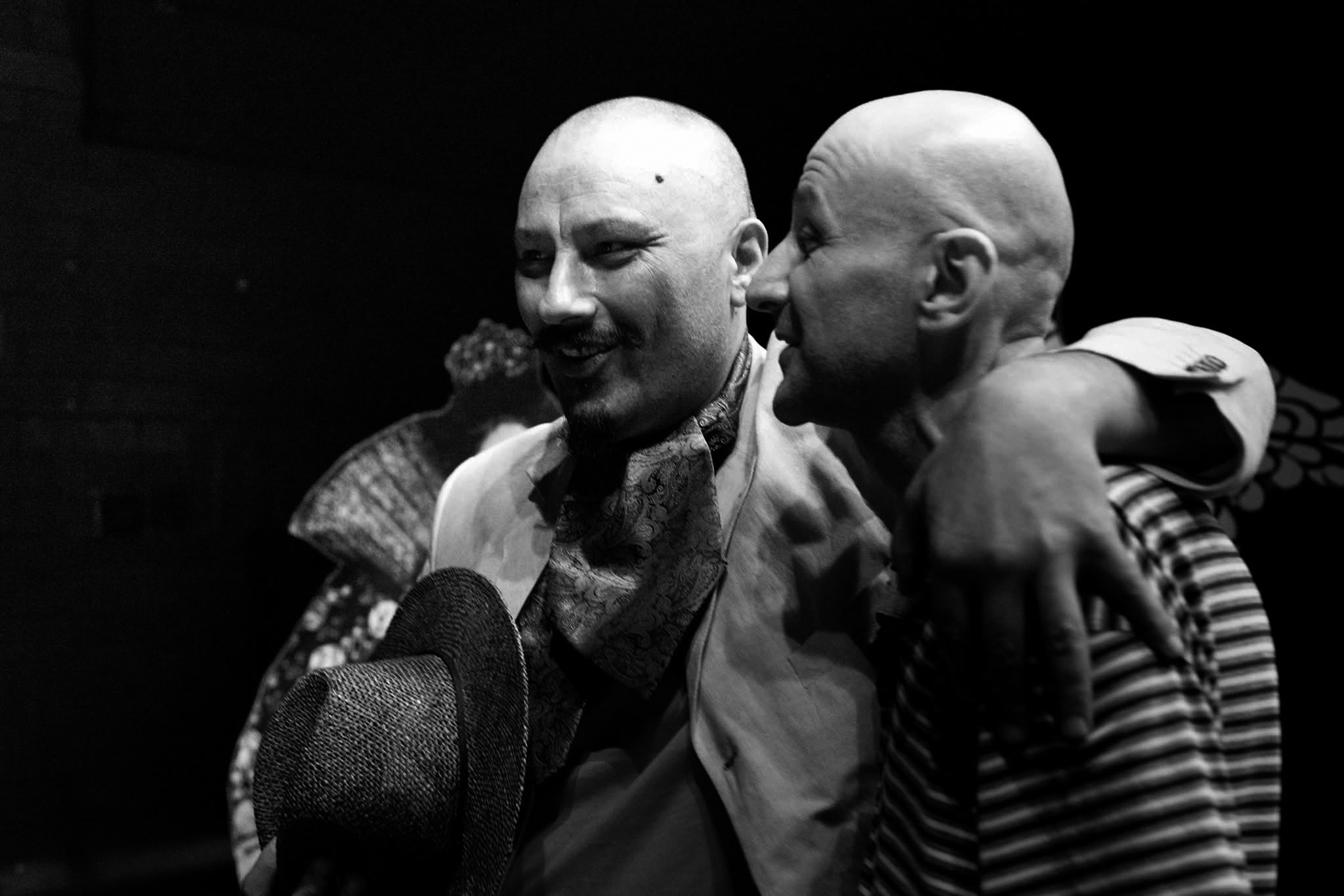
Majestic Zurab was also naïve and tender-hearted. I have seen tears in his eyes more than once. And when, two years after leaving for Sweden, he saw me in Berlin at Alexanderplatz in 2012, he embraced me tightly for a long time and sobbed. Later, in 2017(3), when I saw him again in Brno, out of joy, I snatched off his hat, took his scarf, put it on, and began impersonating Zurab Rtveliashvili. This comic moment was captured by our Czech poet friend Jaromír Typlt. After that, in Wrocław, Ostrava, and Košice, he followed me around for a day, reading poems after me, and, finally, when he caught up with me again in Lviv, we spent several pre-planned days together, sipping delicious borscht in a wonderful monastery tavern and drinking "hrenovaya vodka."
It is no secret that Zurab could be nervous as well. In 2000, at the very start of a series of poetic train performances, right at Tbilisi station, he smashed a carriage window in a fit of irritation and injured his hand. The doctor asked for something thick and firm to immobilize the wrist. Apart from a small volume of Gertrude Stein that I had brought to read, I found nothing suitable in the compartment. Reading the text of the mother of early 20th-century American modernism was postponed – it moved under the arm of a late 20th-century Georgian modernist.
Thus, Zurab Rtveliashvili traveled between Georgian cities for a week, reading poems at railway stations with his hand bandaged and Gertrude Stein under his arm. This "well-read limb" seemed to suit his image particularly well. I remember that at one station, Gogita Chkonia approached him – he was making a film about the festival and jokingly interviewed him about the Gertrude Stein that had become fused with his body.
Zurab’s last festival took place in November 2019. We traveled together from Tbilisi to Sweden, Uppsala. As I mentioned above, he was an artist of closing performances. Perhaps he had a clear idea of what he wanted to do in that moment, but he was always searching for something improvisational.
That day, as he gazed toward the stage, he noticed a rolled-up carpet leaning in the corner. He whispered to me and to his friend, a Swedish poet, publisher and a translator of Georgian poetry, Kristian Carlsson: "When I go on stage, you spread out that carpet, I’ll lie down on it, then wrap me in it –and I’ll take care of the rest." That is how he delivered his short Dadaistic poem "Culture Is the Sea" at the very end. And somehow it turned out to be symbolic.
It was as if he sensed that after complete openness, a period of confinement was coming. Soon after came the pandemic and isolation, which was suffocating for an artist like Zurab. But he could not live without performances and staged small acts even in family spaces. Such was the impromptu poetic-musical scene with the actors of Margo Korablyova’s theater, and even the funny, energetic dances we performed together – first at my place, then at his. Watching those videos, one can hardly believe that this passionate man would be destroyed by illness just a couple of months later.
When I held the hand of the dying Zurab and looked into his eyes, he seemed to keep apologizing for being unwell and kept repeating "vsjo narmalno."(4) He endured the pain with dignity. As soon as he felt a bit better, he would immediately become sociable and cheerful again.
Three days earlier, he had been laughing with Aleko Shughladze(5), recalling scenes from the movie "Stirlitz" word for word. His last smile was for Dato Chikhladze(6), an hour before his death, when I told him, "Look, Dato has come," and a wave of joy spread across his face at the sight of his dear friend sitting beside him.
Those who come to bid him farewell will find him again in his uniform, with an anarchist black flag and a strange drum with a tail. In the masterful photographs of Guram Tsibakhashvili(7), from which his artistry, energy, and confidence radiate. Such people leave their mark on their era. Such friends make life intense and unforgettable. I closed his eyes, but I know that the fire that came from them will always illuminate my heart.’
Shota Iatashvili (b. 1966, Tbilisi, Georgia) är en prisbelönt poet, skönlitterär författare, översättare och litteraturkritiker. Han har gett ut tio diktsamlingar, två romaner, en dokumentärbok, en saga, fyra prosaverk, en bok om litteraturkritik samt sex översättningsvolymer.Han är även för närvarande chefredaktör för Tbilisis internationella litteraturfestival.

for Zurab Rtveliashvili
Only here have I kept
The dreams from ten years ago.
Only here does he still drift –
The poet(8) from Dighomi village
With his stubby fingers,
A bucket brimming with water in one hand,
A cross in the other.
Only here do voices crack, faces splinter,
And earnest monologues spill out
From the constant guests of my grey,
amazing kitchen –
Greedy for wine,
Devoted to black bread and canned sea kale
Only here I stand at midnight,
Under curfew,
With the tenant of Ninoshvili Street,
In Marjanishvili Square,
Where the winds take turns carrying
The Siberian chill of convicts
And the fevered heat of lesbian lovers.
These dreams of mine from ten years past
Are like a heart jolting in the chest,
Like a deep, full laughter –
The ones that remained with me only here,
Here – where I pound my fists
And try to shake off the golden dust,
To free myself from this old fire –
But no –
Stubbornly, once again,
My heart falls asleep,
And I see
The poet from Dighomi village
Flying above the city
With his bald friend(9),
Waving, waving at me
With his ink-stained, stubby fingers.
Notes:
1. Poetry collection (1993) in Georgian language, issued by the group of poets including Shota Iatashvili, Zurab Rtveliashvili and Giorgi Bundovani.
2. A modernized historic building in Tbilisi with spacious halls for exhibitions and displays.
3. Within the framework of the Polish literary project "Reading Month of Georgian Writers", in 2018 Georgian authors journeyed across Poland one after another, offering public readings.
4. (Rus.) "Everything is all right".
5. Famous Georgian writer.
6. Famous Georgian poet and the founder of the Margo Korablyova’s theater in Tbilisi, "the tenant of Ninoshvili Street" from the poem.
7. Georgian photographer of our days.
8. Poet Badri Gugushvili (1951-1996)
9. A poet and painter Karlo Kacharava (1964-1994)