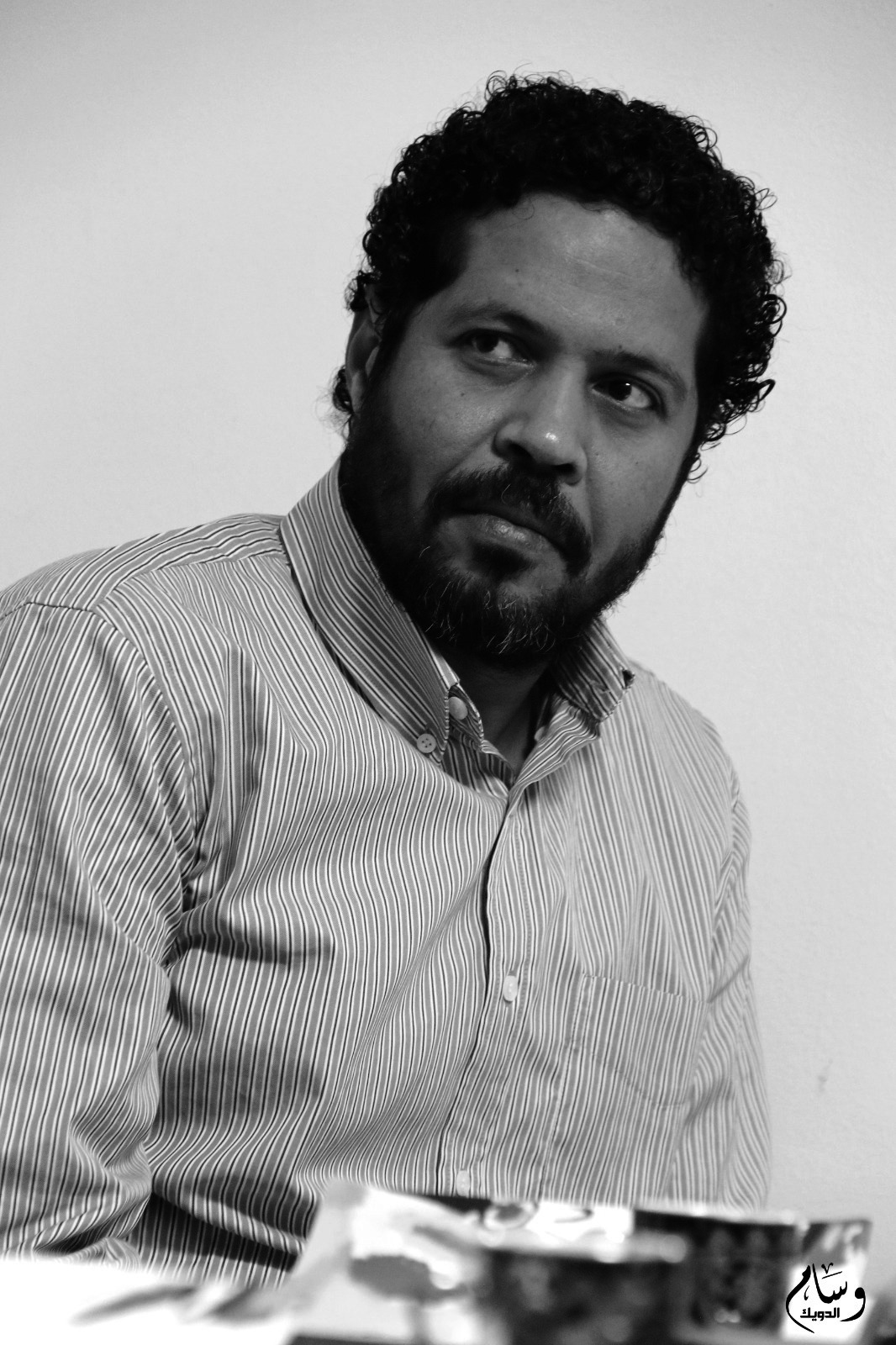
OSAMA GAD
ON THE Footsteps of Tagore is the title we chose for the selected poetic works of the Bengali-Swedish poet Anisur Rahman, which we prepared for publication shortly before his visit to Cairo at the invitation from the 57th Cairo International Book Fair.
The book is a selection of poems by Anisur Rahman, translated into Arabic by the Libyan translator and friend Mamoun Al-Zaidi, and I was honored to write its introduction (published by Yastoron Publishing House). Its title was inspired by the itinerary Anisur Rahman planned for his program in Cairo during his four-day visit.
Anisur Rahman, whose participation program included two poetry evenings, one daytime and one evening, was very keen to visit the Ahmed Shawki Museum (the Museum of the Prince of Poets), the Bibliotheca Alexandrina, the Suez Canal Museum in Ismailia, in addition to visits to Al-Azhar Mosque and Al-Rifa’i Mosque. Behind these visits was a story as intricately intertwined as the cultural fusion that Anisur Rahman himself represents, being a son of an Eastern, Indian culture by birth, and a representative of a typical Western culture by nationality and residence.
Anisur Rahman wanted to visit Karmat Ibn Hani’ (Ahmed Shawki’s Palace and Museum) because Ahmed Shawki is Egypt’s great poet, who once met the great Bengali poet Rabindranath Tagore during Tagore’s visit to Egypt in 1926 upon an invitation from King Fuad.


During that visit, Tagore also traveled to Alexandria and met several prominent figures in Egyptian art and culture. Since Anisur Rahman’s visit to Egypt comes a full 100 years after Tagore’s visit, his keenness to visit the same sites that Tagore had visited inspired our choice of title for this first Arabic collection of his selected works.
Our trip to Alexandria was also an opportunity to visit the Bibliotheca Alexandrina, which stands on the site of its ancient Hellenistic predecessor – a library that carried the torch of civilization and knowledge for centuries after its flame had been extinguished in Athens and Rome during the European Dark Ages.
In a reflection of the Scandinavian culture that Anisur Rahman also represents, we visited the Suez Canal Museum and learned about the details of the Canal’s opening ceremony in 1869. This was prompted by information indicating that the famous Norwegian playwright Henrik Ibsen was among the invitees to the legendary opening ceremony organized by Khedive Ismail for the Canal. That ceremony witnessed the premiere of the opera Aida by the famous Italian composer Verdi, attended by an elite group of the world’s most important monarchs, rulers, politicians, and artists, in honor of Empress Eugénie of France. The celebration also featured an unprecedented display of the Egyptian navy along the Canal’s shores. As described in accounts of the event, Khedive Ismail instructed regional directors to send groups of local inhabitants —men, women, children, with their household items and livestock—who spread out along the Canal: Bedouins, Sudanese, peasants, and Sa’idis, representing all segments of the Egyptian people.
The visit to Al-Azhar Mosque was connected to tracing the footsteps of Syed Mujtaba Ali, (studied at Al-Azhar in 1934-35), and several Bengali cultural and intellectual figures who studied there. The Mosque is recognized not only as the largest Islamic university and leading institution for the teaching of Islam, but also as a center for the study of jurisprudence, creed, and worship, as well as for its close connection to the Arabic language, the language of the Holy Quran. Additionally, the visit granted an opportunity to see the museum of the Noble literature prize awarded Naguib Mahfouz, 1998. Meanwhile, the Al-Rifa’i Mosque houses several tombs of the Muhammad Ali Dynasty in Egypt, including the mausoleums of Khedive Ismail and King Farouk, both linked to the central narrative of Anisur Rahman’s visit.
The visit to the Pyramids came about through a detail during the trip. When his daughter asked if he had visited the Pyramids or not, we decided on a quick visit to the area on our way to Alexandria. Afterwards, we didn’t have time to visit the Grand Egyptian Museum, especially since such a visit would require more than a full day if we wished to cover all its halls and collections.
What is striking about Anisur Rahman’s journey is that, despite being a visit within a specific program, and considering his keenness to utilize it culturally to the maximum, it resulted in an (unofficial) educational tour. I had the personal fortune to follow almost all its details and supervise them, within the framework of a transcontinental friendship with Anisur Rahman. This friendship personally granted me new knowledge about the engagement of Egyptian culture with diverse human civilizations across time.
.jpg)
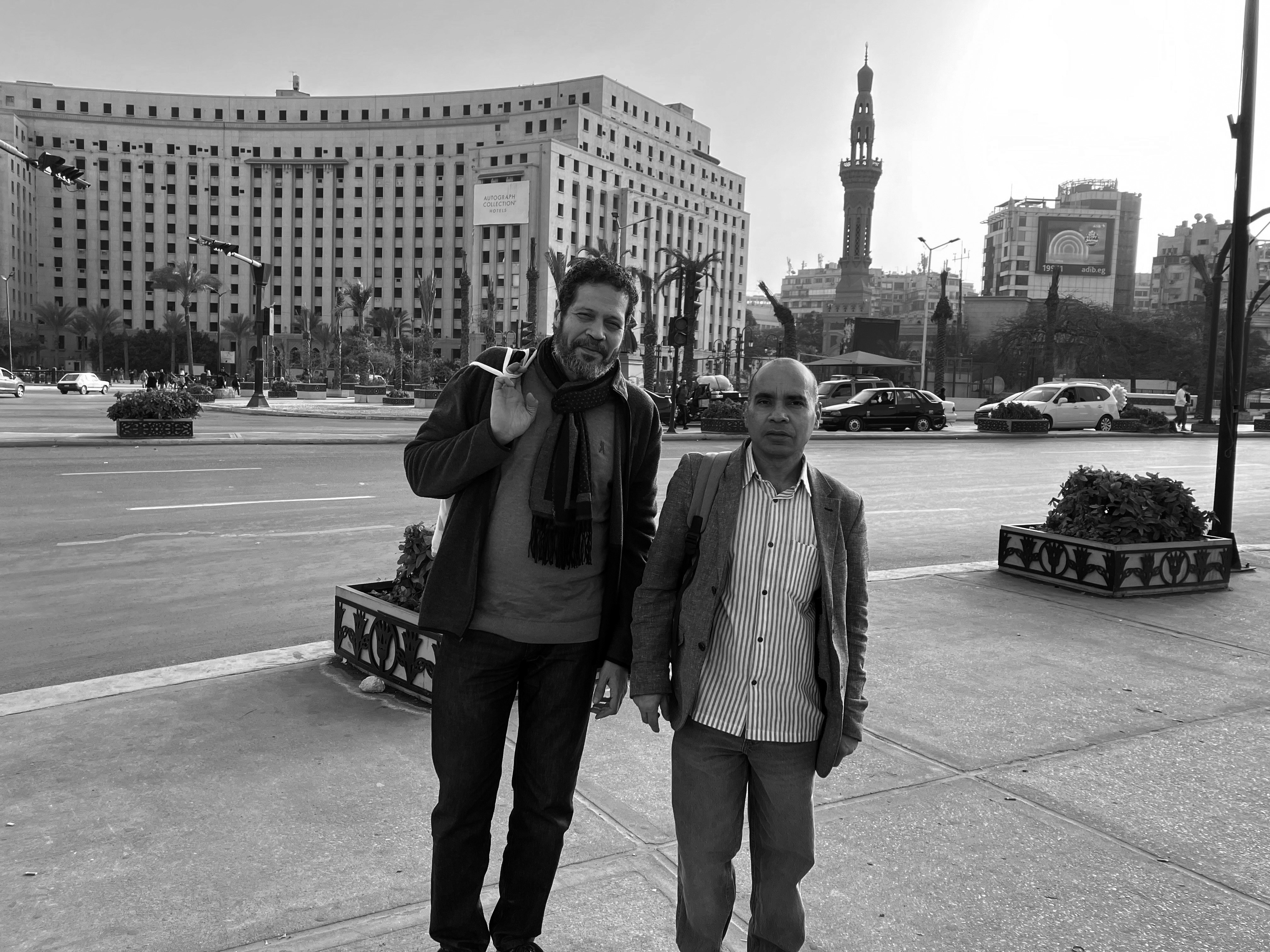
Perhaps it is amusing to note that when we were unable to complete the hoped-for visit to Ahmed Shawki’s Palace, due to the weekly closure, we decided to visit Al-Horreya Garden (formerly the Garden of the Immortals) to see the statue of Ahmed Shawki, identical to the one in the palace. This was also an opportunity to visit the Cairo Opera House and the famous Tahrir Square. The visit also held a pleasant surprise for Anisur Rahman, who was somewhat astonished to find a statue of Mahatma Gandhi standing next to that of Ahmed Shawki.
And so, Anisur Rahman’s visit to Egypt lasted four days, no more, in real time. But it stretched across centuries of knowledge, reaching back to the era of the Pyramids, while never neglecting the contemporary cultural reality, as seen in his meetings with poets and poetry audiences at the Book Fair and his poetry evenings.
Osama Gad is a poet, translator and editor from Cairo.